

Last Updated: October 26, 2026
Quick Summary
To reduce wrist fatigue when riding, fix your setup first: set lever angle so fingers fall straight from forearm to lever, roll the bars to ease outer-palm pressure, and bring the bars back if you're stretching. Then loosen your grip, bend your elbows, and support your torso with your core so your hands carry light pressure only.
- Bars roughly level with or slightly below your shoulders suit most riders on long rides.
- Ride 20 minutes between handlebar changes and make one adjustment at a time.
- Grip with your fingers, not your palm, and consciously relax every 15 minutes.
- Rotate through three hand positions every 15 to 20 minutes before the ache starts.
- Do wrist extensions, isometric holds and grip squeezes two or three times a week.
Table of Contents
- Why Your Wrists Give Out Before Your Bike Does
- Motorcycle Handlebar Position for Comfort: Start Here
- Motorcycle Riding Posture and Wrist Strain: Fix Your Alignment
- Motorcycle Throttle Grip Technique: Loosen the Death Grip
- Motorcycle Throttle Free Play Adjustment: The Overlooked Fix
- Change Hand Position and Reduce Vibration on Long Rides
- Strength and Mobility Work That Protects Your Wrists
- When Wrist Pain Needs a Professional Assessment
- Frequently Asked Questions
Why Your Wrists Give Out Before Your Bike Does
Wrist fatigue is the slow build of ache, numbness and tingling that sets in when your hands carry load they were never meant to hold.
Most guides say "relax your grip" and stop there. But on a badly set-up bike you relax, then re-grip harder ten minutes later when the bars push your weight forward again.
Wrist fatigue has three drivers: too much weight on your hands, too much vibration through the bars, and a wrist angle that kinks nerves and tendons. Fix setup first, then technique, then conditioning. Most changes cost nothing and take one afternoon.
Motorcycle Handlebar Position for Comfort: Start Here
Handlebar position is the biggest lever on hand pressure. Bars too low or far forward tip your torso weight onto your palms; bars too high force your wrists into an awkward bend.
Work through these checks with the bike on a stand or held upright:
- Lever angle. Sit on the bike. Your fingers should fall in a straight line from your forearm to the lever. If your wrist has to bend up or down to reach the brake, rotate the lever perch.
- Bar roll. Loosen the clamp bolts and roll the bars a few degrees. A small change in sweep can take pressure off the outer edge of your palm.
- Reach. If you're stretching to the grips, your shoulders round and your wrists take the load. Bring the bars back or fit a riser.
- Height. Bars roughly level with, or slightly below, your shoulders suit most riders on long rides.
Make one change at a time and ride for 20 minutes before adjusting again. Small increments beat big swings.
Work through these handlebar checks one at a time, riding 20 minutes between each change.
| Check | What to do | Goal |
|---|---|---|
| Lever angle | Rotate the lever perch | Fingers fall straight from forearm to lever |
| Bar roll | Loosen clamp bolts, roll bars a few degrees | Less pressure on outer palm edge |
| Reach | Bring bars back or fit a riser | No stretching to the grips |
| Height | Set bars level with or slightly below shoulders | Suits most riders on long rides |
Motorcycle Riding Posture and Wrist Strain: Fix Your Alignment
Riding posture and wrist strain are tightly linked. A slouched back pushes your weight forward onto your hands, which then grip harder to stabilise the bars.
Here's the posture reset we walk riders through:
- Bend your elbows. Straight, locked arms turn every bump into a jolt through your wrists.
- Support your torso with your core, not your arms. Light pressure on the bars, not a lean.
- Keep your shoulders down and back. Shrugged shoulders shorten the neck and put more load on the hands.
Try this test. Ride a straight section and lift your hands off the bars for a second. If your body lurches forward, your core isn't holding you up. That's your first fix.
Motorcycle Throttle Grip Technique: Loosen the Death Grip
Throttle grip technique decides how much vibration reaches your hands. The death grip, fingers wrapped tight and knuckles white, is the most common cause of hand fatigue we see.
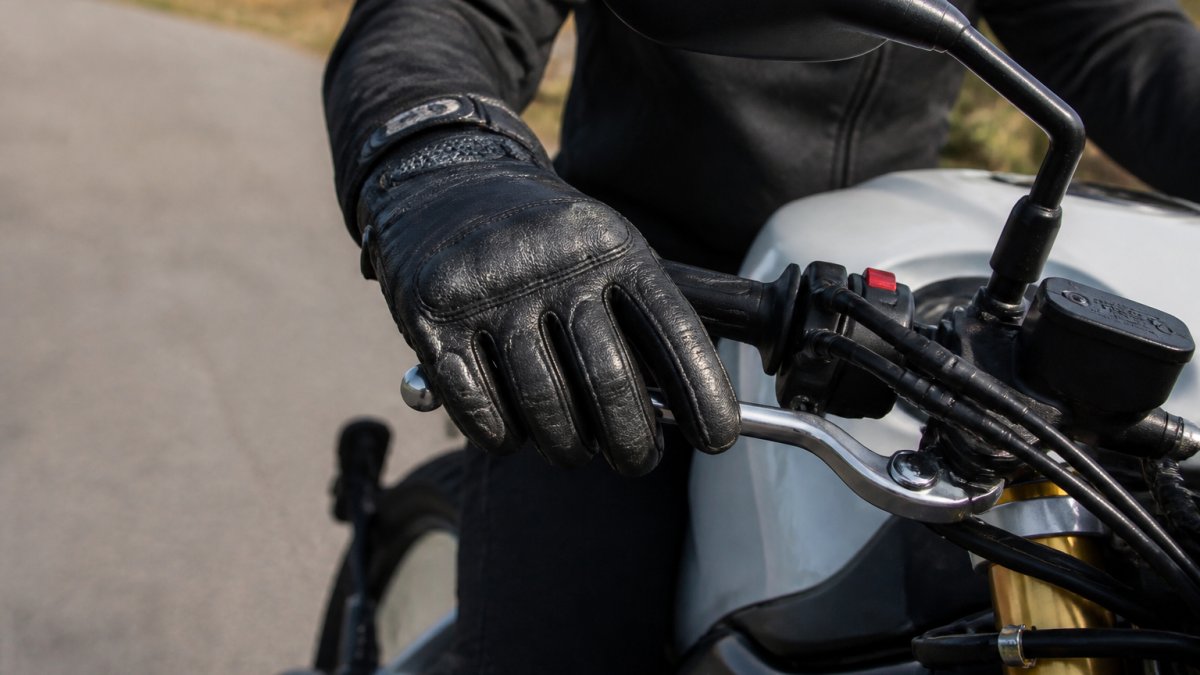
Think of holding a small bird. Firm enough that it can't escape, light enough that it isn't crushed. That's the pressure you want on the throttle.
Three habits that help:
- Grip with your fingers, not your palm. Your palm should rest on the grip, not clamp it.
- Drop your elbows slightly. This lines your forearm up with the throttle and reduces the wrist bend.
- Check in every 15 minutes. Consciously relax your grip. Most riders don't notice they've tightened up until their fingers tingle.
A common mistake is gripping harder when the bike feels unstable. That makes it worse.
Motorcycle Throttle Free Play Adjustment: The Overlooked Fix
Throttle free play is the small rotation before the cable starts pulling. Get it wrong and you fight the throttle all day, which shows up as wrist ache by mid-afternoon.
Too little free play means the throttle is partly open at rest. Your wrist holds tension to keep it closed. For more on how to improve Honda CRF throttle response, see our dedicated article.
Check it like this:
- Find the free play spec in your owner's manual. Most bikes want a few millimetres of rotation at the grip.
- Wiggle the throttle grip gently. You should feel a small, smooth take-up before resistance.
- Adjust at the cable adjuster, then re-check with the bars turned both ways. Free play shouldn't change with steering angle.
- Start the engine and blip the throttle. It should snap back cleanly.
If you've just fitted new grips, free play often changes. You can read more about how to adjust motorcycle throttle free play after fitting new grips in our dedicated guide. Riders chasing a smoother, less jerky throttle might also want to understand ECU tuning for smoother power delivery.
Change Hand Position and Reduce Vibration on Long Rides
Vibration and road shock are the quiet killers on long rides. Bars act like a tuning fork: engine and road frequencies enter at the bar mounts and travel to the grips, where your hands damp them. Two things make that worse, a frequency matching your hands' natural response (common on parallel twins and singles at highway speed), and a tight grip that couples your hands to the bar instead of letting them float.
Separate the two sources before you spend anything
Road shock is low-frequency, from bumps and broken surfaces. Engine vibration is high-frequency, from the bars themselves. Tell them apart with a simple ride test:
- Find a smooth section at your normal cruising speed. If your fingers tingle within 10 minutes, the source is engine vibration.
- Ride the same speed on a coarse, chipped surface. If the ache arrives faster and feels sharper, road shock is the bigger contributor.
- Note the engine speed where it is worst. If it is a narrow band, you have a resonance problem, not a general vibration problem.
That distinction matters because the fixes are different. Resonance responds to bar-end weights, grip mass and bar material. Road shock responds to suspension, tyre pressure and bar compliance.
Change hand position on a schedule, not when it hurts
Most riders change position only after the ache starts, which is too late. Build it into the ride:
- Every 15 to 20 minutes, rotate through three positions: full grip, loose grip with fingers resting on the lever, and palm resting on the grip with fingers open.
- On straight sections, sit up briefly and let your hands hang. Ten seconds is enough to restore blood flow.
- Alternate which hand covers the brake on quiet roads so one wrist is not permanently cocked.
To check whether position changes are working, rate your hands from 1 to 10 every hour. If the number drops by more than two points per hour, your current mix is not enough.
Reduce vibration with measurable changes
Work through these in order and test each one on the same route so you can compare:
- Bar-end weights. They are tuned masses, not decoration. If they are loose, missing or have been swapped for lighter aftermarket items, refit the originals or fit heavier ones. Loose weights often cause more vibration than no weights at all.
- Grips. Thicker, softer grips add mass and compression. The trade-off is reduced feel and, on some bikes, a change in throttle free play, re-check it after fitting.
- Cruise control. On long highway stretches it lets you rest your throttle hand completely. Our guide to motorcycle cruise control for long distance covers fitting and using it.
A quick troubleshooting order
When your hands are suffering, work down this list rather than guessing: grip pressure first, then hand-position schedule, then bar-end weights and grips, then gloves, then tyre pressure and suspension. Stop when the hourly rating stops improving. The sequence moves from free to cheap to expensive.
Strength and Mobility Work That Protects Your Wrists
A stronger, more mobile wrist handles load better. This is the part most riders skip, and it pays off most on multi-day trips. Riding loads the wrist in a fixed, slightly extended position for hours while the forearm makes constant small corrections, so conditioning should match that.
What riding actually demands
Three capacities matter, in this order:
- Endurance in a held position. Your wrist extensors work isometrically to keep the throttle and levers steady. That is a stamina problem, not a strength problem.
- Grip endurance, not maximum grip. You rarely need to crush anything; you need to hold a light grip for hours without tightening up.
- Shoulder and upper-back endurance. If your postural muscles fade, your arms take the load and your wrists pay for it.
A riding-specific weekly routine
Do this two or three times a week, off the bike, ideally after a ride. Keep it short enough that you actually do it.
- Wrist extensions and flexions. Light dumbbell or resistance band, 2 sets of 15 each direction. Slow on the return; the lowering phase is where the endurance gain is.
- Isometric holds. Hold a light weight or a filled bottle with your wrist level for 30 to 45 seconds, 2 sets. This mimics the held riding position better than repeated curls.
- Grip squeezes. A tennis ball or grip trainer, 3 sets of 20, alternating hands. Squeeze for two seconds, release fully.
Progression and timing
Start with one set of each movement for two weeks. Add a set only when the previous week left no soreness beyond mild stiffness the next morning. In the week before a long trip, cut the volume in half, arrive fresh, not pre-fatigued.
The mobility checks worth doing
Two quick tests tell you where to focus:
- Wrist extension. Place your palms flat on a table, fingers pointing towards you, and gently lean back. If you feel a sharp stretch through the wrist, your extensors are tight, prioritise the palm-down stretch.
- Shoulder reach. Stand with your back to a wall and try to touch it with both hands overhead without arching your lower back. If you can't, your shoulders are limiting your reach, which pushes your wrists into a bend on the bars.
Retest every few weeks. If the tests improve but your hands still fatigue on the bike, the problem is more likely setup than conditioning, go back to the handlebar and posture checks first.
When Wrist Pain Needs a Professional Assessment
Some wrist pain is a setup problem. Some isn't. Knowing the difference protects your hands and your season.
See a doctor or physiotherapist if you notice:
- Numbness or tingling that persists after you stop riding
- Weakness in your grip that doesn't recover overnight
- Pain that wakes you at night
Persistent numbness and tingling in the fingers can point to nerve compression (Carpal tunnel syndrome - symptoms, treatment and causes).
For everything else, the fixes above handle most cases. Setup first. Then technique. Then conditioning.
Wrist fatigue is a setup and technique problem, not something you have to live with.
Frequently Asked Questions
How can I reduce wrist fatigue on a motorcycle?
Start with bike setup: adjust lever and bar position so your wrists sit neutral, not bent. Then check throttle free play, which should have a small amount of slack per your manual. Loosen your grip, change hand position every 20 to 30 minutes on long rides, and add padded gloves or ergonomic grips to cut vibration. Strength work for your forearms and grip helps too. If pain persists, get the bike fitted properly.
Can throttle grip or free play contribute to wrist fatigue?
Yes. Too much throttle free play forces you to twist further and hold the grip tighter to maintain speed, which strains the forearm and wrist. Too little free play can make the throttle snatchy, so you tense up. Set free play to the manufacturer's specification and check it after fitting new grips or bar risers. A smooth, predictable throttle means a lighter grip and less wrist fatigue.
Will wrist numbness from riding go away?
Often it improves once you fix the causes: excessive weight on your hands, a death grip, vibration, or a bent wrist position. Take breaks, shake out your hands, and adjust your setup. If numbness or tingling persists after rides, or you get weakness or pain at night, see a doctor. Persistent nerve symptoms are not something to ride through.
When should I seek medical advice for wrist pain after riding?
See a health professional if pain lasts more than a few days after a ride, if you have numbness, tingling or weakness in the hand, or if symptoms appear at rest or at night. Also get checked if pain follows a fall or impact. Early assessment catches nerve or tendon issues before they become long-term problems, and you can return to riding sooner.
