

Last Updated: October 23, 2026
Quick Summary
ECU tuning can void your motorcycle warranty, but only for components directly affected by the modification, and an ECU tuning warranty depends on how well you document the work. Australian Consumer Law requires manufacturers to prove the ECU tune caused the specific failure before denying a claim.
- Manufacturers must prove causation between your ECU tune and component failure to deny warranty claims.
- Document everything: keep receipts, reports, and records of what was tuned, when, and by whom.
- Back up your original ECU file before reflashing to prove modifications are reversible.
- Electrical and transmission components typically remain covered unless the tune directly affects them.
- Work with reputable tuning providers who provide written documentation of all changes made.
Table of Contents
- Does ECU Tuning Void Your Motorcycle Warranty?
- How Australian Consumer Law Protects Your Warranty Rights
- What Manufacturers Can Actually Deny After ECU Tuning
- Motorcycle ECU Flash Detection: Can Dealers Find Out?
- Piggyback vs Reflash: Which Poses Greater Warranty Risk
- How to Tune Your ECU Without Losing Warranty Coverage
- Common Mistakes That Guarantee Warranty Denial
- Frequently Asked Questions
Does ECU Tuning Void Your Motorcycle Warranty?
The short answer: ECU tuning can void your motorcycle warranty, but only for components directly affected by the modification, and an ECU tuning warranty depends on how well you document the work. Australian Consumer Law gives you stronger protections than many riders realise.
Most riders assume any ECU remap means total warranty loss. That's not how it works. A failed alternator shouldn't be denied just because you tuned the fuel map. The law is on your side here, but you need to understand the rules and document everything from day one.
Here's what changes the game: the tuning method you choose, how well you document the work for your ECU tuning warranty, and which components actually fail. We'll break down each scenario so you know exactly where you stand before you tune.
How Australian Consumer Law Protects Your Warranty Rights
Australian Consumer Law doesn't let manufacturers use a blanket denial. They can't refuse a warranty claim just because modifications exist on your bike. They must prove the modification caused the specific failure.
The Australian Competition and Consumer Commission (ACCC) has been clear on this point. A manufacturer claiming "you modified it, so nothing is covered" won't hold up. They need evidence that your ECU tune caused that particular component to fail.
This protection applies to all consumer goods, including motorcycles. If your ECU remap didn't touch the charging system, the alternator is still under warranty. The burden of proof sits with the manufacturer, not you.
What this means in practice: keep records. Document what was tuned, when it was done, and by whom. If a component fails, you have a strong position if the manufacturer tries to deny the claim without proving causation.
What Manufacturers Can Actually Deny After ECU Tuning
Manufacturers can legitimately refuse warranty claims on components directly affected by ECU modifications. The key word is "directly." This is where most confusion happens.
Engine and fuel system claims
The engine and fuel system are the most obvious targets for denial. If you tune the ignition timing, fuel injection, or boost pressure, the manufacturer can refuse claims on those systems if they fail. The causal link is clear.
However, even here, there's nuance. A tune that improves throttle response shouldn't deny warranty on engine bearings if they fail from a manufacturing defect. The tuning changed how fuel is delivered, it didn't change bearing metallurgy or assembly quality.
Many manufacturers try to be aggressive here. They'll deny engine block cracks, piston failures, and valve train issues the moment they see an ECU remap in the history. Some of these denials don't hold up under scrutiny. If the failure mode doesn't match the tuning change, you have grounds to push back.
Electrical and transmission coverage
This is where riders often win disputes. Your ECU tune shouldn't void the alternator, starter motor, or wiring harness warranty. These components perform the same function whether the fuel map is stock or modified.
Transmission warranty is even more protected. Unless your tune changes shift logic on a DCT or affects transmission pressure mapping, a gearbox failure has nothing to do with your ECU remap. Manufacturers sometimes deny these claims anyway, that's where documentation and the ACCC guidelines become your use.
Motorcycle ECU Flash Detection: Can Dealers Find Out?
Yes, dealers can detect ECU flashing in most cases. Modern diagnostic tools read the ECU software version and compare it against factory records. If the version doesn't match, they know something changed.
Some tuning methods are harder to detect than others. A professional reflash often leaves traces that a trained technician will find. Piggyback controllers are sometimes easier to hide because they sit between the ECU and sensors, but a thorough inspection will reveal them.
The real question isn't whether they can find out. It's whether they'll look. Many dealers won't dig deep unless a major failure occurs. But if you're claiming warranty on engine work, expect scrutiny.
Transparency beats surprises when a claim comes in.
Piggyback vs Reflash: Which Poses Greater Warranty Risk
Piggyback controllers sit between your ECU and engine sensors. They intercept signals and modify them in real time. The original ECU file remains unchanged. This makes piggyback systems harder to detect, but not impossible.
Reflashing replaces the ECU software entirely with a modified version. The original file is gone (unless you keep a backup). This is more permanent and easier to detect. When the dealer scans the ECU, they see the modified version immediately.
From a warranty perspective, reflashing can be more defensible in some cases. You have a clear record of what was changed and by whom.
Here's the practical difference: reflashing is cleaner, more reliable, and easier to document. Piggyback systems are cheaper upfront but create more uncertainty. For warranty protection, professional documentation can strengthen your position.
SUZUKI DRZ4S 2025-2026 ECU REFLASH MAIL IN SERVICE →
How to Tune Your ECU Without Losing Warranty Coverage
The strategy is simple: document everything, work with professionals, and keep your original ECU file. These three steps protect you far more than most riders realise.
Document everything from the start
Before you send your ECU anywhere, take photos of the current state. Record the bike's mileage, any existing modifications, and the reason you're tuning. Write a detailed description of what you want changed and why.
When the tuning is complete, get a written report. This should include the ECU version before and after, specific changes made, and any recommendations for maintenance or usage. This document becomes your legal shield if a warranty dispute arises.
Keep all receipts and correspondence. Save emails with your tuning provider. If you're doing mail-in service with SSS Motorcycles, we provide documentation that shows what was modified and when. This creates a clear record.
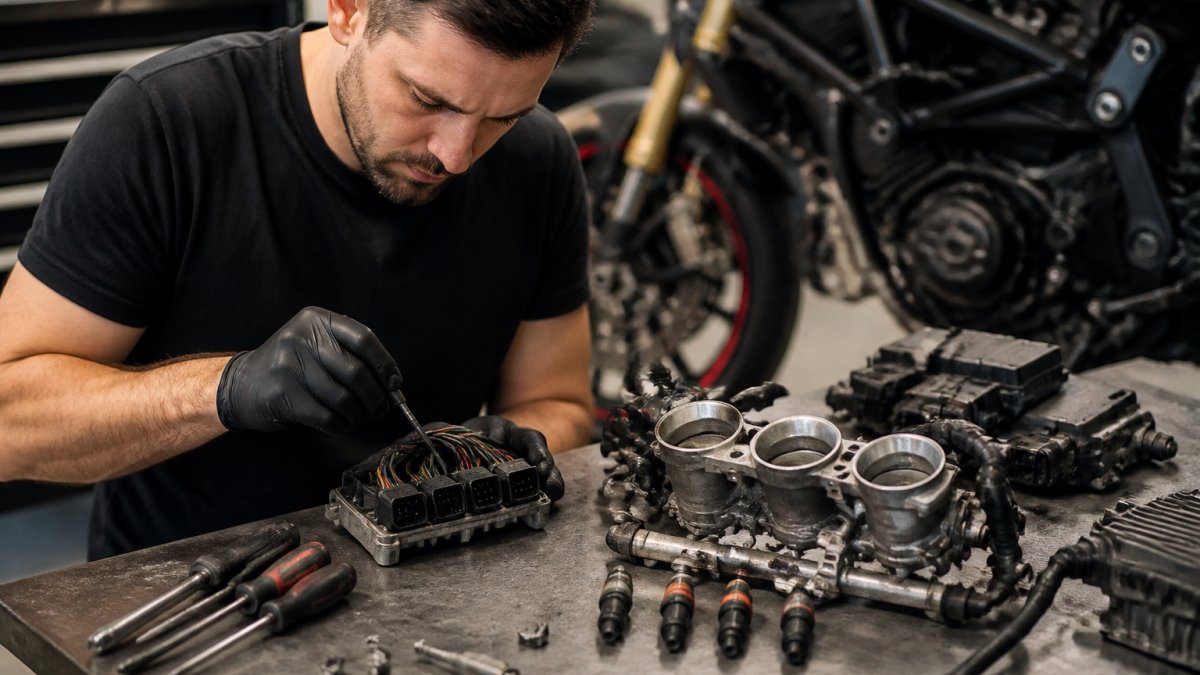
Work with reputable tuning providers
Not all ECU tuning shops are equal. We've been tuning motorcycles for over 25 years.
A professional tuning provider will:
- Provide written documentation of all changes
- Recommend maintenance intervals if needed
- Keep records for warranty disputes
When you go to a shop that cuts corners, you may lose protection. A cheap tune from an untested provider may leave you exposed.
Australian Competition and Consumer Commission guidance on consumer guarantees makes clear that manufacturers can't deny warranty claims without proof of causation. Working with professionals who document everything puts you on the right side of that law.
Keep your original ECU file
This is critical. Before any reflashing, ask your tuning provider to back up your original ECU file. Store it safely. If you ever need to return the bike to stock, for warranty claims, resale, or troubleshooting, you can reflash the original file back in.
Many tuning shops do this automatically. SSS Motorcycles backs up original files. If you need to revert for any reason, we can restore it.
Having the original file also proves you didn't permanently damage the ECU. If a dealer questions the modification, you can show that the original firmware still exists and is intact. This demonstrates you made a reversible change, not a permanent alteration.
Common Mistakes That Guarantee Warranty Denial
Riders often make decisions that destroy their warranty position unnecessarily. These mistakes are preventable.
Failing to document the work. You tune your bike at a mate's garage with no paperwork. Six months later, the engine fails. The dealer denies warranty.
Using unknown tuning providers. A cheap shop with no reputation tunes your ECU. When problems arise, they may have disappeared.
Not keeping the original ECU file. The tuning shop doesn't back up your original file. Years later, you need to prove the modification was reversible.
Ignoring manufacturer warnings. Some bikes require specific fuel grades or maintenance intervals after tuning. You ignore these recommendations. A failure occurs that could have been prevented.
| Mistake | Consequence | Prevention |
|---|---|---|
| No documentation | Warranty denial without proof | Keep all receipts and reports |
| Unknown provider | No accountability if issues arise | Work with established shops like SSS Motorcycles |
| Original file lost | Can't prove modification was reversible | Back up before any reflashing |
| Multiple modifications | Unclear which caused failure | Tune one system at a time |
| Ignoring maintenance | Failure could have been prevented | Follow all tuning provider recommendations |
ECU tuning doesn't automatically void your warranty. Australian Consumer Law protects you far more than manufacturers want you to know.
The path forward is clear: work with professionals who document everything, keep your original ECU file, and follow maintenance recommendations. SSS Motorcycles offers professional ECU tuning services that include documentation. We know how to tune your bike safely. Learn more about ECU remap safety and practical considerations to understand what happens after tuning, or explore a detailed guide for your specific model to see how we approach tuning.
Frequently Asked Questions
Can a manufacturer deny a warranty claim because of an ECU tune?
Yes, but only if they can prove the tuning caused the specific failure. Under Australian Consumer Law, manufacturers cannot void your entire warranty simply because modifications exist. They must demonstrate a direct causal link between the ECU tuning and the defect. For example, if your engine fails and the tune altered fuel delivery, they may deny that claim. However, unrelated components like brakes or suspension remain covered. Keep documentation of what was tuned and when to protect your position if a dispute arises.
How does Australian Consumer Law protect motorcycle owners regarding modifications?
Australian Consumer Law requires manufacturers to prove modifications caused a specific failure before denying a warranty claim. They cannot reject claims for unrelated defects simply because your bike has been tuned. The law also protects you from unfair contract terms that blanket-deny warranty for any modification. If a manufacturer claims your ECU tune voided the entire warranty without proving causation, you have grounds to challenge that decision. This protection applies regardless of whether the tune was done in-house or by a third party.
Can a dealership detect an ECU flash after it has been returned to stock?
Modern diagnostic tools can sometimes detect signs of previous flashing, such as altered calibration data or timing anomalies, even after a reflash returns the bike to stock settings. However, detection is not guaranteed and depends on the tuning method used and the sophistication of the dealer's equipment. A piggyback controller is easier to spot if still installed. If you plan to return your ECU to factory settings before warranty service, work with a reputable tuner who can ensure a clean revert. Transparency about modifications is always safer than attempting to hide them.
Is it possible to have a performance tune and maintain manufacturer warranty?
Yes, but with conditions. You can maintain warranty coverage on components unaffected by the tune. For example, if you tune fuel and ignition for throttle response, your suspension, brakes, and electrical systems remain covered. The key is working with a professional tuner and documenting everything. SSS Motorcycles offers mail-in ECU reflash services for models like the Honda CRF300L (from $352.00) and CFMOTO 450MT (from $249.00) with staged tuning options designed for Australian conditions. Keep your original ECU file and records of what was modified to strengthen your position if warranty questions arise.
