

Last Updated: October 23, 2026
Quick Summary
Big bore kit reliability comes from matching the cylinder, piston, fuel mapping and cooling as one build, then assembling carefully and running the engine in properly. A well-matched kit on a healthy engine can last many years, while a mismatched one fails fast.
- A worn bottom end will not survive extra displacement, so fix it before fitting the kit.
- Warm the engine fully and let it cool completely three times during break-in.
- Change the oil early to clear assembly debris after the build.
- Aim for a richer air-fuel mixture under load than a stock engine runs.
- The most reliable builds get frequent oil and valve checks, not the most expensive parts.
Table of Contents
- Why Big Bore Kit Reliability Depends on the Whole Build
- Big Bore Kit Installation Checklist: What to Verify Before and After
- Motorcycle Big Bore Kit Break-In Procedure That Protects the Top End
- Big Bore Kit ECU Tuning: Fuel, Ignition and Compression Targets
- Big Bore Kit Maintenance Schedule for Daily and Adventure Riding
- Reliability by Engine Type, Use Case and Component Quality
- Total Cost and Ongoing Maintenance Implications
- Frequently Asked Questions
Why Big Bore Kit Reliability Depends on the Whole Build
Big bore kit reliability is not decided by the piston alone. It comes from how the cylinder, piston, fuel mapping and cooling work together, and how carefully the engine is assembled and run in.

At SSS Motorcycles, we see the same pattern in workshop enquiries. Riders blame the kit when the real cause is a lean tune, a worn crankshaft or a rushed break-in.
The core tension is simple. More displacement means more load on every part around it. Reliability is a trade-off you manage, not a switch you flip.
Here is what most guides get wrong: they treat the kit as the upgrade. The kit is only one piece. The build around it decides whether the engine survives.
Big Bore Kit Installation Checklist: What to Verify Before and After
A big bore kit installation checklist is the single best defence against early failure. Check the engine before you buy, and check the build before you ride.

Pre-Installation Checks
- Compression and leak-down test on the stock engine
- Check crankshaft end play and rod bearing condition
- Confirm the cylinder is round and within spec
- Verify kit compatibility with your exact model year
- Inspect cooling system and thermostat
- Confirm fuel pump and injector condition
A worn bottom end will not survive extra displacement. Fix it first, or expect failure.
Post-Installation Checks
- Recheck valve clearances after the first heat cycles
- Confirm no engine light codes remain
- Check oil level and watch for consumption
- Verify coolant level and fan operation
- Listen for top-end noise at idle and under load
Motorcycle Big Bore Kit Break-In Procedure That Protects the Top End
The motorcycle big bore kit break-in procedure protects ring sealing and the top end. Short, varied heat cycles matter more than a long gentle ride. Rings need load to seat, but not sustained high heat.
A practical approach:
- Warm the engine fully, then let it cool completely. Repeat three times.
- Ride with light-to-moderate throttle, varying engine speed.
- Avoid constant highway cruising and full throttle for the first stretch.
- Change the oil early to clear assembly debris.
- Recheck valve clearances and torque after the first heat cycles.
Assembly lubrication matters too. Use a light oil for piston installation to help ring sealing. Avoid heavy synthetic oil during assembly, which can cause temporary oil consumption before the rings seat.
Early Warning Signs to Watch For
- Rising oil consumption
- Blue smoke from the exhaust
- New top-end rattle or tick
- Overheating or a fan running constantly
- Engine light codes returning
Stop and investigate any of these early. Small symptoms become big failures.
Big Bore Kit ECU Tuning: Fuel, Ignition and Compression Targets
Big bore kit ECU tuning is where most reliability gains are won or lost. More displacement pulls more air at the same throttle opening, so the fuel map must be recalibrated to match. A lean air-fuel mixture under load is the fastest route to a burnt piston, and detonation from too much ignition advance can crack a ring land before the first service.
Rather than chasing a single magic number, treat tuning as a set of measurements you verify on a dyno or with data logging. Exact specifications vary by engine, camshaft, compression ratio and fuel, so use the targets below as a framework and confirm final values with a tuner who knows your model.
What to Measure and Verify
- Air-fuel ratio (AFR): aim for a richer mixture under load than a stock engine runs. Most tuners target somewhere in the low-to-mid 13s at wide-open throttle on pump fuel, and richer still on high-compression builds. Cruise can stay leaner, but never lean under sustained load.
- Ignition timing: conservative advance, pulled back from the stock curve in the midrange and top end where cylinder pressure peaks. Listen for detonation and check plug colour and knock sensor data.
- Compression ratio: keep it sensible for the fuel you will actually buy. Raising compression raises cylinder pressure and heat, so pair it with quality fuel and a matching tune or reliability drops.
- Cylinder head temperature and coolant temperature: log these on the first rides. A big-bore engine that runs hotter than stock under the same conditions is a sign the tune or cooling needs attention.
- Injector duty cycle: confirm the standard injectors are not maxed out. If duty cycle is near its limit, larger injectors or a higher-flow pump may be needed.
Why These Targets Matter
A lean mixture raises combustion temperature and can melt or seize a piston. Too much advance creates detonation, which hammers ring lands and bearings. Too little advance costs power and raises exhaust temperature. The goal is not maximum power on the dyno sheet but a safe margin across the rev range and across the weather and fuel quality you ride in.
If you are not confident reading logs or dyno data, budget for a professional tune as part of the build. A matched ECU reflash supplied with a kit removes much of the guesswork, but you should still verify the result on your own bike with your own fuel and exhaust.
CRF300 SSS STAGE 3.25 BIG BORE KIT 325CC DEVELOPED FOR AUSTRALIAN FUELS ⛽️ →
Big Bore Kit Maintenance Schedule for Daily and Adventure Riding
A big bore kit maintenance schedule keeps a modified engine dependable, especially for daily riding and long-distance touring. Shorter service intervals are cheap insurance.
| Interval | Check |
|---|---|
| Every ride | Oil level, coolant, unusual noise |
| First 1,000 km | Oil change, valve clearance check |
| Every 3,000-5,000 km | Oil and filter, valve clearances |
| Seasonally | Cooling system, fuel system, compression check |
Riders covering big distances should lean toward the shorter end of these intervals. Heat and sustained load are harder on a modified engine than short trips.
Reliability by Engine Type, Use Case and Component Quality
Reliability varies by engine and by how the bike is used. A moderate displacement increase on a well-maintained engine is far safer than an aggressive build on a tired one. The table below sets out how the main variables interact, so you can judge where your own bike and riding sit.
| Variable | Lower-risk choice | Higher-risk choice | Why it matters |
|---|---|---|---|
| Displacement increase | Small to moderate over stock | Large jump with thin cylinder walls | More displacement means more load on the crank, bearings and cooling system |
| Compression ratio | Near stock or slightly raised | High compression on pump fuel | Higher pressure and heat raise detonation risk |
| Camshaft | Mild profile matched to the kit | Aggressive profile with stock valve springs | Aggressive lift can cause valve float and spring fatigue |
| Bore and stroke | Bore-only increase on a proven kit | Long-stroke or big-bore-and-stroke combinations | Rotating assembly stress rises with stroke and rpm |
| Component quality | Quality piston, correctly bored and resleeved cylinder, matched gasket kit | Cheap pistons, mismatched clearances, reused head bolts | Cheap parts and wrong clearances are a common failure cause |
| Engine condition before build | Fresh top end, good bottom end, leak-down test passed | Worn crank, tired bearings, unknown history | A worn bottom end will not survive extra displacement |
Reliability by Use Case
- Daily riding and commuting: favour moderate displacement and conservative tuning. Short trips mean more cold starts and more condensation in the oil, so keep service intervals short and use a quality oil.
- Adventure touring and long-distance riding: prioritise cooling, oil quality and service access. Sustained load and heat are harder on a modified engine than short trips, so lean toward the shorter end of the maintenance schedule and carry spare oil.
- Track and competition use: accept a shorter service life for peak performance. Expect more frequent rebuilds, more oil changes and closer attention to valve clearances and compression.
Reliability by Engine Design
Single-cylinder and small-displacement engines are often the most tolerant of a moderate big-bore kit because the displacement increase is proportionally small and the load on the crank is manageable.
Riding style matters too. Constant high-rpm abuse wears a modified engine faster than smooth, varied riding, and a big-bore engine that is thrashed from cold will not last regardless of the parts fitted.
For riders wanting a proven path, our CRF300 Stage 3.25 325cc big bore kit is designed for Australian fuel quality and includes a matched ECU reflash, so the fuel and ignition side is handled with the kit.
Total Cost and Ongoing Maintenance Implications
Total cost is more than the kit price. Budget for installation, tuning, and a higher ongoing maintenance load. A big bore kit changes how often you service the bike, not just how it rides.
Ongoing costs to plan for:
- More frequent oil and filter changes
- Regular valve clearance checks
- Possible supporting upgrades to the crankshaft and rotating assembly
- Quality fuel and careful tuning
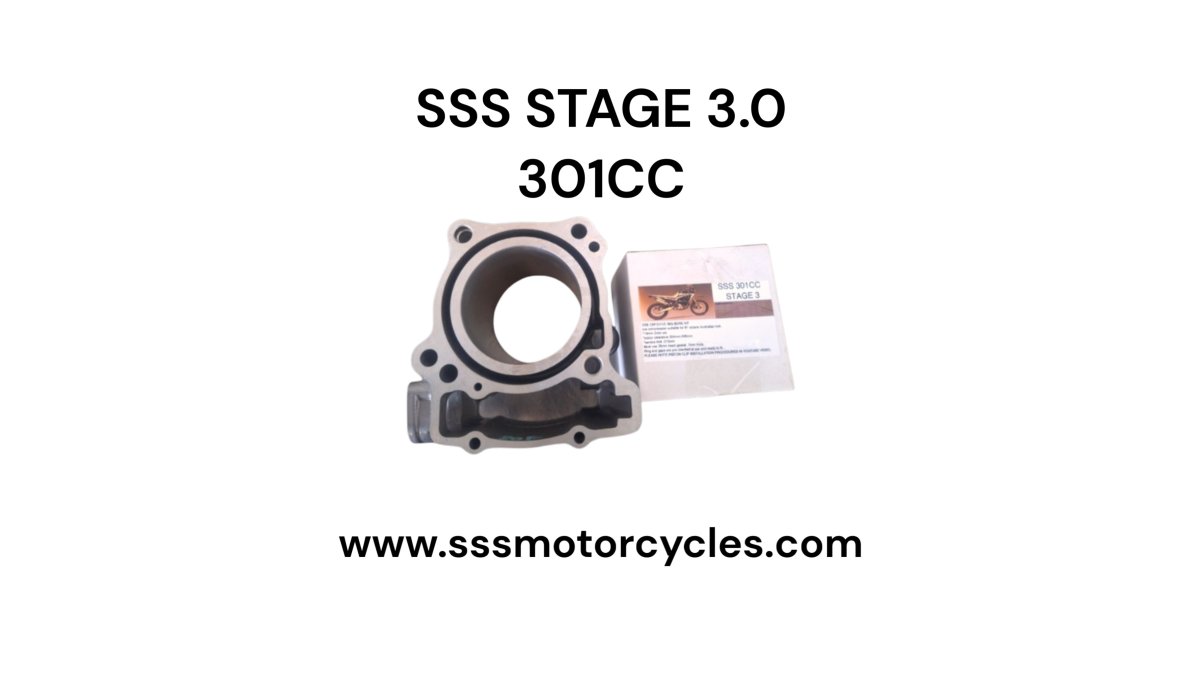
If you are weighing options, our SSS Stage 3.0 301cc big bore kit is a lower-compression route that suits riders prioritising reliability over peak power.
A common mistake is budgeting for the kit and forgetting the maintenance. That is where reliability quietly slips.
Frequently Asked Questions
Does a big bore kit reduce engine reliability?
It can if the build is rushed or the tune is wrong. A moderate displacement increase on a well-maintained engine, using quality components and a proper ECU reflash, keeps reliability close to stock. The risk rises with aggressive compression, skipped supporting upgrades and poor fuel mapping. Treat the kit as one part of a system: piston, cylinder, camshaft, intake and tune all need to match.
How should you break in a motorcycle engine after fitting a big bore kit?
Use light machine oil or WD-40 during piston assembly to help ring sealing, then avoid synthetic or high-viscosity oil for the first 1000km. Vary load and rpm, avoid sustained high revs, and check oil level often. Watch for overheating, unusual noise or rising oil consumption. After 1000km, change oil and filter and move to your normal maintenance schedule.
What maintenance does a motorcycle big bore kit need?
Expect more frequent oil and filter changes, regular valve clearance checks, and close monitoring of oil consumption and coolant temperature. Inspect the air filter often, especially in dusty off-road use, and confirm the ECU tune stays matched to any exhaust or intake changes. A big bore kit maintenance schedule should also include periodic compression checks to catch wear early.
Does a big bore kit require ECU tuning?
Yes. Increasing displacement changes airflow and cylinder filling, so the factory fuel and ignition maps are no longer correct. A dedicated reflash adjusts fuel mapping and ignition timing for the new bore, intake and exhaust. Skipping this step raises the risk of lean running, heat and detonation, which are the main threats to reliability.
The real challenge with a big bore build is not choosing the kit. It is keeping the whole engine in balance after you fit it. If you want a build matched to your bike and riding, SSS Motorcycles can help with ECU tuning, big bore kits and supporting performance parts. Get started with SSS Motorcycles and build an engine that lasts.
