

Table of Contents
- Can I Ride After an ECU Remap? The Direct Answer
- Motorcycle ECU Remap Safety Checks Before Your First Ride
- How Long Does an ECU Remap Take? Timing and Turnaround
- Motorcycle ECU Remap Warning Light: What It Means and What to Do
- Motorcycle ECU Remap Dyno Tuning: Why It Matters for Your First Ride
- What to Do If Your Bike Runs Poorly After Remapping
- How the Answer Varies by Bike, Fuel, and Modifications
- Frequently Asked Questions
Last Updated: October 9, 2026
Can I Ride After an ECU Remap? The Direct Answer
Yes, you can ride after ECU remap, and most riders do so the same day. An ECU remap is a recalibration of your bike's engine control unit, the computer that manages fuel injection, ignition timing and throttle response. It changes how the engine behaves, not whether it runs.
At SSS Motorcycles, we reflash ECUs for Australian fuels and conditions, and we tell every customer the same thing: the bike is rideable straight away, but the first ride is a test, not a victory lap.
Here's what most guides get wrong. They treat the remap as the finish line. It isn't. The first 50 kilometres tell you whether the calibration suits your bike, your fuel and your modifications.
That's what this guide covers. You'll get a pre-ride check, warning signs to watch for, timing expectations, and a clear plan if something feels off.
Motorcycle ECU Remap Safety Checks Before Your First Ride
Safety checks before your first ride after a motorcycle ECU remap take about ten minutes and can catch problems before they become expensive. Do them in this order.
What to check before you start the engine
- Confirm the battery is fully charged and terminals are tight
- Check the ECU connector is seated and clipped in properly
- Look for any warning lights that stay on after the dash self-test
- Verify fuel level and that you're running the octane the tune was built for
- Check oil and coolant levels
- Confirm the exhaust and air filter are the ones the calibration was written for
- Squeeze the throttle to feel for smooth, free movement
If your bike ran fine before the flash and something feels different at this stage, stop and call your tuner. Don't guess.
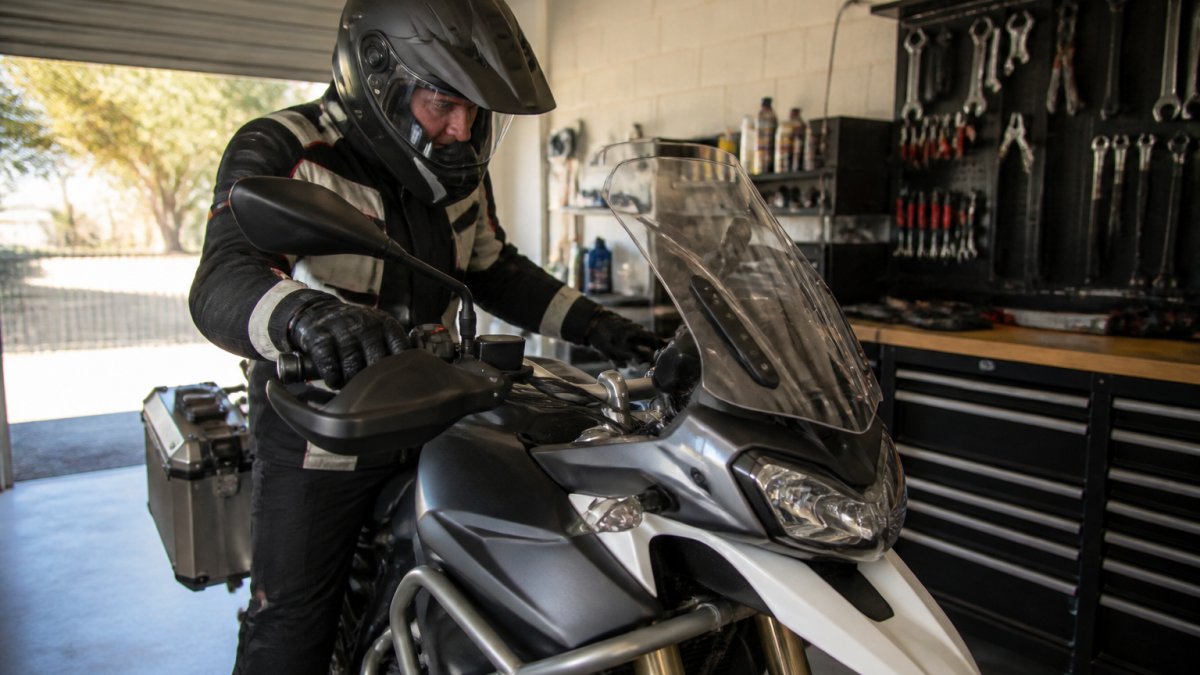
Warning signs to watch for on the first ride
Start gently. Ride the first ten minutes at low load and low revs.
Watch for these red flags:
- Warning lights that stay on or flash
- Misfire or a stutter under steady throttle
- Detonation (a sharp pinging or rattling under acceleration)
- Hesitation when you open the throttle from low revs
- Engine temperature climbing faster than normal
- Diagnostic codes stored in the dash
One or two small quirks in the first few minutes can settle as the ECU adapts. Anything that gets worse as the engine warms up needs attention.
How Long Does an ECU Remap Take? Timing and Turnaround
The keyword question is really two questions: how long does the remap itself take, and how long before you can ride? They have different answers.
The flash itself. A bench or OBD reflash of a stock ECU typically takes 20 to 60 minutes once the bike is on the stand. A dyno-developed custom calibration takes longer because the tuner is building and validating the file, not just writing it. A mail-in reflash usually runs a 24-hour in-shop turnaround from arrival, excluding weekends and public holidays, plus postage both ways. For example, our Yamaha T7 ECU Reflash Mail in service offers a 24-hour turnaround from time of arrival into store, not including weekends and public holidays.

The rideable window. You can ride as soon as the flash completes and the ECU has finished its key-on self-test. There is no manufacturer-mandated running-in period for a reflash, because you have not changed any mechanical clearances. What you have changed is the calibration, and that needs validation, not bedding in.
Remap Method |
Workshop Time |
Total Downtime |
Rideable When |
|---|---|---|---|
In-person dyno |
1-3 hours |
Same day |
Immediately after the dyno session |
Mail-in reflash |
24 hours in shop |
3-5 days with postage |
As soon as the ECU is refitted and the self-test passes |
Custom dyno tune |
3-5 hours |
Same day or next day |
After the tuner signs off the validation pull |
Adaptation and relearning. Some ECUs need a short relearn after a flash. Common patterns include:
- Idle relearn. Let the bike idle for a few minutes from cold so the ECU can trim idle fuel.
- Throttle-position relearn. Some ride-by-wire bikes need a key-on, twist-to-full, key-off cycle before the throttle maps behave normally.
- Fuel-trim learning. Closed-loop areas of the map may take 20 to 50 kilometres of varied riding to settle. This is normal and not a fault.
Not every bike does all three. Your tuner should tell you which apply to your model, and if they don't, ask before you ride.
The validation ride. Budget 30 to 60 minutes for the first outing, with two or three stops to check for warning lights, unusual heat and odd behaviour. That is the part riders forget, and it is the part that catches mismatches early.
Motorcycle ECU Remap Warning Light: What It Means and What to Do
A warning light after an ECU remap usually means the ECU has logged a fault, not that the tune has failed. The fix depends on which light and which code.
Engine management lights are the most common. On many bikes, this traces back to an oxygen sensor that needs to be unplugged after the flash. Our Honda XL750 Transalp (Version 1 generation flash only) and Yamaha T7 calibrations both require the O2 sensor to be disconnected, and the ECU will flag a fault if you skip that step.

Here's the practical sequence:
- Note which light is on and whether it's steady or flashing
- Check your dash for stored diagnostic codes
- Confirm the O2 sensor state matches your tune's requirements
- Check the ECU connector hasn't worked loose
- Call your tuner with the code before clearing anything
Don't clear codes blindly. That erases the evidence your tuner needs.
Motorcycle ECU Remap Dyno Tuning: Why It Matters for Your First Ride
Dyno tuning matters because it validates the calibration under real engine load before you ride. A flash without a dyno run is a guess dressed up as a tune.
On the dyno, the tuner can watch air-fuel mixture, ignition timing and engine temperature across the rev range. Problems that would only show up at full throttle on the road show up safely on the rollers.
This is where fuel injection and air-fuel mixture adjustments get dialled in. Too lean and you risk detonation and heat. Too rich and you lose power and foul plugs.
Our SSS Performance calibrations are developed in-house on Australian fuels, including 91 RON, because adventure riders can't always find premium in remote areas.
If your bike only gets a mail-in flash with no dyno validation, the first ride becomes your dyno. That's workable for a stock bike on a proven stage tune.
What to Do If Your Bike Runs Poorly After Remapping
If your bike runs poorly after remapping, stop riding and contact your tuner before you touch anything else. Most poor-running complaints trace to a mismatch between the tune and the bike's actual setup.
Run through this list:
- Wrong stage for your mods. A stage 1 tune on a bike with a full exhaust will run lean.
- O2 sensor still connected. Many tunes require it unplugged.
- Air filter mismatch. A high-flow filter changes airflow and needs a matching calibration.
- Fuel octane too low. If the tune was built for 95 and you filled 91, expect trouble.
- Loose connector or vacuum line. Simple, common, easy to miss.
- Bad tank of fuel. Drain and refill before assuming the tune is at fault.
The most common cause we see is a rider ordering a tune without listing their modifications. We ask for mods in the order comments for exactly this reason. A calibration built for a stock airbox will not suit a bike with an open airbox and a full system.
If the tuner confirms the tune is correct and the bike still runs badly, get it back on the dyno. Guessing wastes time and risks damage.
How the Answer Varies by Bike, Fuel, and Modifications
The short answer to whether you can ride after ECU remap is yes. The useful answer is that how soon, how hard and how legally depends on five variables most guides skip.
1. The bike and its ECU generation. A stock adventure bike on a proven stage tune is rideable immediately.
2. Engine condition. A remap does not fix a tired engine. If compression is down, valve clearances are out, or the fuel pump is weak, a new calibration can expose those faults rather than hide them.
3. Fuel grade. Tunes built for 91 RON suit remote touring where premium is not available. Tunes that demand 95 or 98 RON limit where you can ride and what happens if you misfuel.
4. Map type: road versus track. A road map prioritises part-throttle smoothness, fuel economy and emissions compliance. A track-only map may disable closed-loop operation, remove speed limiters or change fan-on temperatures. Track maps can void registration compliance if used on public roads.
5. Legal and insurance context. A remap that changes emissions or noise output can affect roadworthiness, and insurers generally require disclosure of performance modifications. A remap is a modification.
Change Made |
Retune Needed? |
Why |
|---|---|---|
Slip-on exhaust |
Yes |
Changes airflow and back pressure |
Full exhaust system |
Yes |
Bigger flow change, needs recalibration |
High-flow air filter |
Yes |
Alters air-fuel mixture |
Big bore kit |
Yes, custom |
Major change to engine load |
Cosmetic changes only |
No |
No effect on engine behaviour |
Add a modification without a retune and you undo the calibration work. The bike may still run, but it will not run right.
If you have added an exhaust or filter and want a calibration built around it, tell the tuner the full spec when you order.
Frequently Asked Questions
Can I ride my motorcycle straight after an ECU remap?
Yes, in most cases you can ride immediately after an ECU remap, but take it easy for the first 15 to 20 minutes. The ECU needs time to adapt to its new fuel and ignition maps. Start with gentle acceleration and avoid holding constant throttle for long periods. If your bike has a warning light or runs rough, stop and contact your tuner before continuing.
How long should I wait before riding after an ECU remap?
You do not need to wait before riding. Most tuners recommend starting the bike, letting it idle for 2 to 3 minutes to reach operating temperature, then riding gently for the first 20 minutes. This gives the ECU time to adjust fuel trims and confirm the new calibration is working correctly. Avoid aggressive throttle or high RPM during this initial period.
What should I do if the engine warning light comes on after a remap?
If the engine warning light comes on after a remap, stop riding and check for stored diagnostic codes. Common causes include an unplugged O2 sensor, a loose connector, or a calibration mismatch. If you have a diagnostic tool, read the codes. If not, contact your tuner. Do not continue riding with a flashing warning light, as this can indicate a serious fault.
Does a motorcycle need a dyno run after an ECU remap?
A dyno run is not strictly required after every remap, but it is the best way to confirm the tune is safe and making the expected power gains. Dyno tuning lets the tuner check air-fuel ratios across the rev range and catch lean or rich conditions before they cause damage. For modified bikes with exhaust or air filter changes, a dyno validation is strongly recommended.