

Last Updated: November 1, 2026
Quick Summary
A CRF300 Stage 2.5 kit for adventure riding is a matched package of intake, fuel mapping and exhaust parts that lifts a restricted dual-sport into usable touring territory without opening the engine. It combines an SSS ECU with matching intake parts, such as a second snorkel, vented airbox lid or performance air filter system, with an exhaust and suspension chosen to suit your riding.
- The CRF300L and CRF300L Rally share engine, throttle body and most intake architecture, so ECU, airbox and exhaust parts generally cross over.
- Never mix a high-flow intake with standard mapping, as lean running at high RPM is the most common self-inflicted failure.
- The SSS Stage 2.1 ECU mapping suits 91 octane and above and is built for a vented airbox lid with a slip-on or full exhaust.
- For loaded adventure riding, suspension sprung to your rider-plus-luggage weight is the highest-value change.
- Post-installation checks take about ten minutes and prevent most problems riders report after a build.
Table of Contents
- What a CRF300 Stage 2.5 Kit Actually Contains
- How to Check CRF300 Upgrade Kit Compatibility
- CRF300L ECU Tuning: The Part That Makes the Kit Work
- CRF300L Airbox Upgrade and Intake Options
- Exhaust, Suspension and Cockpit Parts for Adventure Riding
- Total Kit Cost and Staged Budget Options
- CRF300L Post-Installation Checks and Reliability
- Building Your Stage 2.5 Kit With SSS Motorcycles
- Frequently Asked Questions
What a CRF300 Stage 2.5 Kit Actually Contains
A CRF300 Stage 2.5 kit for adventure riding is a matched package of intake, fuel mapping and exhaust parts that lifts a restricted dual-sport into usable touring territory without opening the engine.
A Stage 2.5 build combines an SSS ECU with matching intake parts, such as a second snorkel, vented airbox lid or performance air filter system, with an exhaust and suspension chosen to suit your riding.
The Stage 2.5 label matters because it sits deliberately between a simple reflash and a big bore build.
Why Stage 2.5 Sits Between a Reflash and a Big Bore
A Stage 1 reflash addresses the snatchy low-RPM throttle on the stock CRF300L, while a big bore kit increases displacement. The Stage 2.2 Velocity kit pairs ECU mapping with intake parts to add airflow.
How to Check CRF300 Upgrade Kit Compatibility
Compatibility is where most CRF300 builds go wrong, and it is rarely about the headline part. Four checks cover it: model year, standard versus Rally, existing exhaust configuration, and the fuel you can actually buy.
Run through this checklist before buying:
- Confirm your model year falls within the kit's stated fitment range
- Identify whether you ride the CRF300L or the CRF300L Rally
- Identify whether you run a stock, slip-on or full exhaust system
- Confirm you can access 91 octane fuel or better
- Check whether your airbox lid is standard or vented
- Note your rider weight and typical luggage load for suspension spring rates
Model-year and Rally-versus-standard fitment
The CRF300L and CRF300L Rally share the engine, throttle body and most intake architecture, so ECU, airbox and exhaust parts generally cross over. They diverge on suspension and cockpit hardware: the Rally runs longer travel and different mounting points, and screen and bar components are not interchangeable. Fitting a standard-bike suspension kit to a Rally means chasing spring rates and ride height never designed for that chassis.
Model year matters most around the airbox and ECU. Confirm the kit's listed fitment range against your bike rather than assuming "CRF300L" covers every year.
Supporting parts you must not skip
A kit is only as good as the parts it assumes are already there. The common supporting-part traps:
- Vented lid with sealed OEM lid. A kit built around a vented airbox lid while you still run the sealed OEM lid means the mapping assumes airflow the engine is not getting. The result is a motorcycle that feels flat rather than sharp.
- Intake component on standard mapping. The Velocity intake stack must not be used with standard mapping; above 8500rpm substantially more fuel is required. Match the parts to the tune.
- Exhaust without the matching calibration. A slip-on or full system on a stock tune delivers noise and very little else.
Installation difficulty and when to book a professional
Some of this is a driveway job; some is not. A realistic guide:
| Task | Difficulty | Realistic time (first-timer) |
|---|---|---|
| Second snorkel only | Easy | ~20 minutes |
| Vented airbox lid | Easy | Under an hour |
| Slip-on exhaust | Easy | Under an hour |
| ECU swap or reflash | Easy (plug-and-play or mail-in) | Minutes once the unit is out |
| Full performance airbox | Moderate to hard | Four to six hours |
| Fork cartridge kit and rear shock | Hard | Book a suspension specialist |
The Velocity intake stack requires airbox removal; SSS quotes four to six hours for a first-timer and one to two hours for an experienced mechanic. Suspension setup should reflect your rider-plus-luggage weight, which SSS asks you to specify at checkout. SSS offers mail-in fork cartridge fitting for $200 plus oil and fork seals.
CRF300L ECU Tuning: The Part That Makes the Kit Work
ECU tuning is the calibration layer that tells the engine what to do with the extra air and exhaust flow. Without it, bolt-on parts deliver noise and very little else.
The SSS Stage 2.1 ECU mapping is designed in Australia for Australian fuels and conditions, suits 91 octane and above, and is built to run with a vented airbox lid and a slip-on or full exhaust system.
The Stage 2.1 ECU is designed to reduce low-RPM throttle snatchiness, improving control in slow technical sections and traffic.
If you want to understand how engine control units manage fuel and ignition timing on modern dual-sport machines, the Bosch automotive electronics overview is a useful primer on the underlying systems.
For riders who prefer to keep their original unit, SSS offers a mail-in reflash service, with the price including return express postage; once received, the ECU can be ready to resend within 48 business hours.
CRF300L Airbox Upgrade and Intake Options
Airbox work is an important part of CRF300L builds, as airflow into the engine affects performance.
SSS STAGE 2.1 KIT CRF300 UPGRADE KIT →
There are three practical paths:
- Second snorkel. An additional snorkel that works with a Stage 2.0 reflash, with SSS quoting around 20 minutes to fit.
- Vented airbox lid. Required for the Stage 2.1 ECU calibration.
- SSS Performance Airbox. A bolt-in assembly with twin snorkel and velocity intake stack, which requires SSS ECU 2.2 mapping or the SSS 325 big bore kit.
The velocity intake stack sits between the throttle body and airbox and is designed specifically for the CRF300. See the performance airbox options and how they are configured.

Exhaust, Suspension and Cockpit Parts for Adventure Riding
Adventure riding punishes stock suspension faster than any other upgrade area. The CRF300 ships with components that work on smooth trails but wallow badly once you add luggage and a full tank.
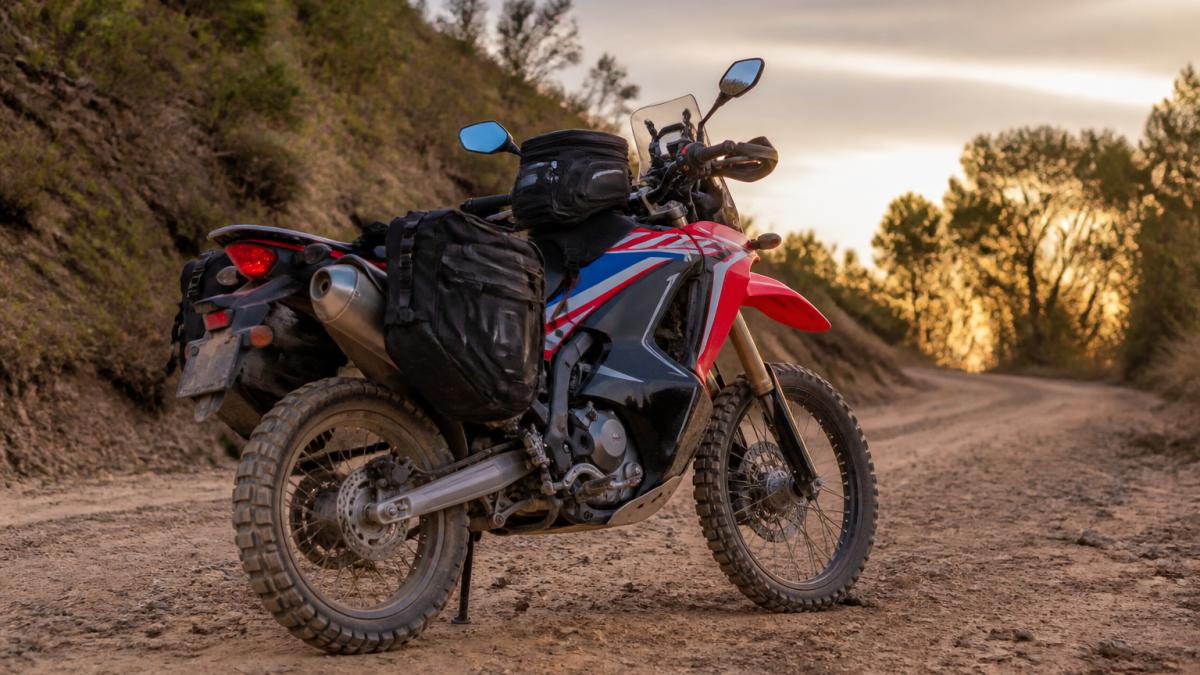
The CRF300 YSS suspension upgrade package pairs a YSS Z1 fork cartridge kit with a YSS MZ456 rear shock. Please specify rider weight and luggage weight in checkout notes. A -30mm option is also offered.

Exhaust choice affects both power and practicality. The SSS CRF300 exhaust comes with a DB noise killer, is test-fitted to a motorcycle before shipping, and carries a one-year warranty against faulty workmanship. The exhaust is not ADR approved.
Total Kit Cost and Staged Budget Options
Staging the build spreads cost and lets you feel each change on its own. The table gives typical outlays, but the more useful question is which parts are essential for the riding you actually do.
| Stage | What You Add | Typical Outlay | Best For |
|---|---|---|---|
| Stage 1 | ECU reflash only | $352 (mail-in) | Riders fixing throttle snatch on a budget |
| Stage 2 | ECU, second snorkel, filter | $549 | Stock or slip-on exhaust, light trail use |
| Stage 2.1 | ECU, vented lid, filter | $579 | Aftermarket exhaust, sharper response |
| Stage 2.2 | ECU, velocity stack, airbox lid, filter | $795 | Riders chasing maximum airflow |
| Suspension | Fork cartridges and rear shock | $1,990 | Loaded touring and rough terrain |
| Exhaust | Full system with noise killer | $750 | Completing the airflow path |
Essential versus optional for adventure riding
For loaded adventure riding, the priorities are different from a track or peak-power build. Ranked by value per dollar for touring:
- Essential first: suspension sprung to your rider-plus-luggage weight, the highest-value change for loaded touring and rough terrain.
- Calibration: the SSS ECU addresses low-RPM throttle snatchiness and is designed to work with the intake parts it is matched to.
- Intake: a vented airbox lid and filter are part of the matched Stage 2.1 setup.
- Exhaust: the SSS exhaust is a separate purchase for those who want to complete the airflow path.
Realistic installed cost
Parts prices are only part of the picture. Budget for fitting on top:
Staged budget options
Buy the calibration and intake parts as a matched set, as they are designed to work together.
CRF300L Post-Installation Checks and Reliability
Post-installation checks take about ten minutes and prevent most of the problems riders report after a build. Do them before your first real ride.
- Cycle the ignition key on and off three times if the engine warning light appears, then restart
- Verify the airbox lid and snorkel are seated fully
- Run the bike on 91 octane or better, as the mapping is designed for that range
Keep your filter serviced, as increased airflow means more frequent cleaning on dusty routes.
Building Your Stage 2.5 Kit With SSS Motorcycles
SSS designs its ECU mapping in Australia for Australian fuels and conditions, supplies outright-purchase ECUs, and test-fits exhaust systems before shipping. Suspension packages are set up using the rider and luggage weight you specify at checkout.
Get started with SSS Motorcycles and build a CRF300 that handles loaded adventure riding as well as it handles the commute.
Frequently Asked Questions
What does a CRF300 Stage 2.5 kit include?
Stage 2.5 is the step between a reflash-only build and a big bore. SSS sells the Stage 2.2 Velocity Upgrade Kit for $795.00, which includes an SSS Stage 2.2 ECU, Velocity intake stack, second snorkel, airbox lid with vent and a Twin Air filter system. The CRF300 YSS suspension upgrade package is priced at $1,990.00. Specify rider and luggage weight at checkout so spring rates match your loaded riding.
How do I check whether a CRF300 upgrade kit fits my model year?
Start with the model year and variant. SSS lists its CRF300 kits as fitting the CRF300L and CRF300L Rally from 2021 to 2025. Then confirm the supporting parts match: a Stage 2.1 ECU is calibrated for a vented airbox lid, while the Velocity intake stack must not be run on standard mapping because above 8500rpm the engine needs substantially more fuel. If your bike falls outside the listed range, ask before ordering rather than assuming it will fit.
Does a CRF300 Stage 2.5 kit require ECU tuning?
Yes. The intake and airbox parts in a Stage 2.5 build change airflow enough that the standard fuel map no longer suits. SSS states plainly that the Velocity intake stack must not be used with standard mapping or other versions, and that the Stage 2.2 flash is required. The Performance Airbox carries the same warning: it needs either SSS ECU 2.2 mapping or the SSS 325 big bore kit, or you risk lean running and poor performance. Mapping is designed in Australia for local fuels and runs on 91 octane or higher.
Can I install a CRF300 upgrade kit at home?
Most of it, yes, with basic mechanical knowledge. The second snorkel takes around 20 minutes if you follow the fitting process. The Velocity intake stack is the slow part because the airbox has to come out: SSS quotes 4 to 6 hours for a first-timer and 1 to 2 hours for an experienced mechanic. Fork cartridge fitting is the job most riders hand over, and SSS offers mail-in fitting for $200 plus oil and fork seals.
What should I check after installing a CRF300 performance kit?
If the engine warning light comes on, cycle the ignition key on and off three times, then start the bike and recheck. SSS has a video covering this.
